LOADBLUEPRINTPallet and logistics planning report
14 September 2026PALLETISATION & LOGISTICS PLAN
400 × 300 shipper review
Pinwheel layer · Repeat base layer · 92/100 balanced score9cases / layer
6layers
54cases / pallet
648units / pallet
79.6%deck footprint
LOAD GEOMETRYPallet views
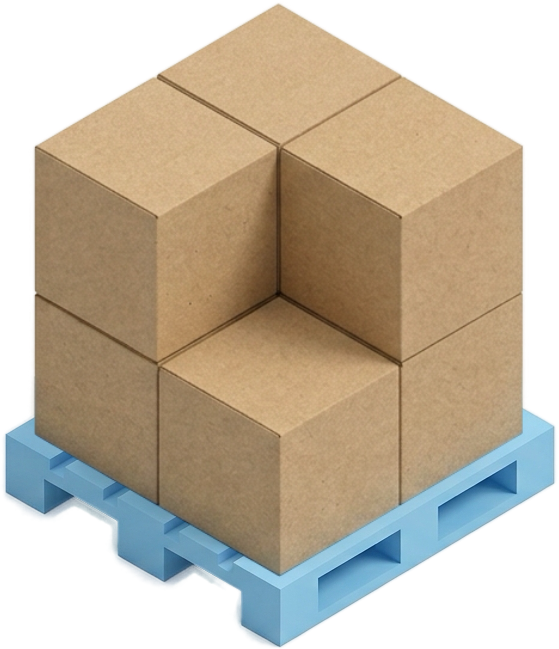
PALLETPerspective
Regular Slotted Container (RSC)6 layers54 cases
PALLETLayer plan
Utilisation profileEach bar uses its own planning limit
Pallet footprint79.6%
Pallet cube79.6%
Working-strength demand76.9%
Planning outputThe selected layout passed the active geometric filters. Confirm finished-unit performance, load restraint, pallet condition, handling equipment, vehicle limits and transit performance before implementation.
INPUT SPECIFICATION
- Carton
- 400 mm × 300 mm × 250 mm
- Carton gross weight
- 8.4 kg
- Product context
- Not specified
- Case style
- Regular Slotted Container (RSC) · 0201
- Board reference
- C flute · Single Wall 32 ECT
- Platform
- Australian wooden pallet
- Platform size
- 1,165 mm × 1,165 mm
- Maximum overall height
- 1,800 mm
- Maximum gross weight
- 1,200 kg
SELECTED RESULT
- Pattern
- Pinwheel layer
- Layer sequence
- Repeat base layer
- Carton orientation
- H up
- Minimum case support
- 100% geometric overlap
- Unsupported edge
- 0 mm
- Interlayers
- 0
- Overall load height
- 1,650 mm
- Gross pallet weight
- 491.6 kg
- Cube utilisation
- 79.6%
- Annual pallets
- 1,852
REVIEW FLAGS
- Interlock improves lateral continuity but may reduce the effective vertical compression path.
- Compression output uses reference ECT and a flute-height proxy. It remains advisory and does not constrain the solver.
- The layer centre is offset from the platform centre; review load balance.
- Board and flute references support an advisory compression estimate only; confirm the actual board and finished-case performance before release.
- Maximum geometric count is not a certification of pallet, package or transport performance.
DATA PROVENANCE
Case style: Case & Carton Styles · row 2 · Confirmed.Board reference: ECT-Mullen Grades · row 6 · cross checked reference.Platform: CHEP Australia. Published platform dimensions and average tare. Confirm the actual pallet and handling environment.Generated by a deterministic planning model. Whole-stack support and weight transmission are calculated from case-footprint intersections. The compression screen is not a laboratory, conditioning or transit test. Ten workbook datasets imported 11 September 2026.SCREEN OUTCOME
Advisory reference screen passed
Single Wall · 32 ECT and C flute reference30.3%Working-load reserve
STRENGTH BASIS
- Basis type
- Reference estimate
- Edge crush
- 5.6 kN/m
- Caliper basis
- 4 mm–4 mm
- Calculated raw BCT
- 2,301 N–2,460 N
- Humidity loss
- 30%
- Additional loss
- 0%
- Safety factor
- 3.00
- Allowable working load
- 537 N
WHOLE-STACK DEMAND
- Layer sequence
- Repeat base layer
- Layers assessed
- 6
- Peak demand on one case
- 412 N
- Governing layer
- 1
- Average bottom demand
- 412 N
- Capacity / demand
- 1.30×
- Working-load reserve
- 30.3%
- Applied as solver limit
- No
METHOD TRACE & LIMITATIONS
- Reference mode uses the supplied flute-height range as a caliper proxy and remains advisory.
- After 30% humidity loss, 0% additional loss and a 3 safety factor, the working load is 537 N per case.
- The selected stack transfers a maximum of 412 N onto one case at layer 1.
- The derated working-load basis provides 30.3% reserve above the calculated peak demand.
- This screen does not model creep, moisture history, score lines, print and die-cut damage, pallet deflection, product load-sharing or dynamic transport.